China's Moon Mission vs NASA's Artemis: The New Space Race of the 21st Century
A deep dive into the rising space rivalry between China and the U.S. as both prepare to return humans to the Moon — comparing Artemis and China's 2030 lunar ambitions, spacecraft, rockets, and official statements.

starzz
we serve space information.
📑 Table of Contents
Overview: A New Lunar Rivalry
The 21st-century space race is heating up again — not between the U.S. and the Soviet Union, but between NASA and China's CNSA. Both nations are aiming to land astronauts on the Moon by the end of the decade. NASA's Artemis Program plans a crewed lunar landing through Artemis III in 2026–2027, while China targets its first crewed Moon landing by 2030 through the Mengzhou and Long March 10 systems.
NASA's Artemis Program: Returning to the Moon
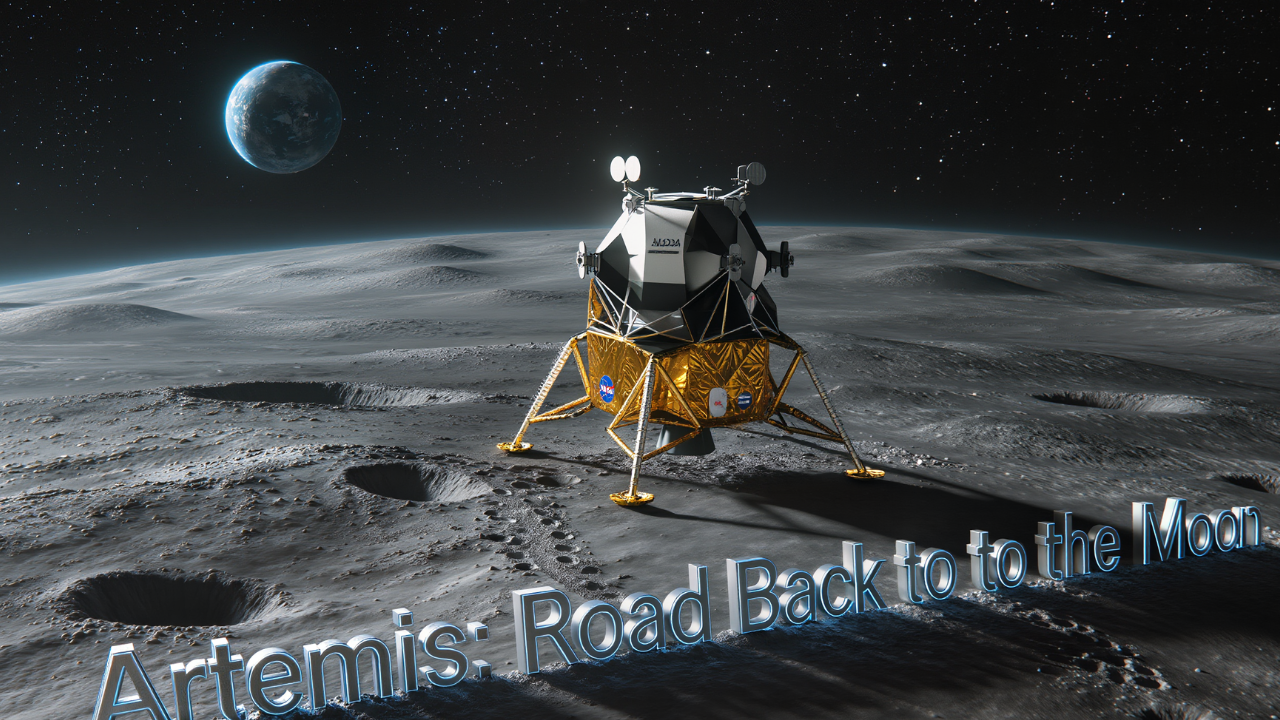
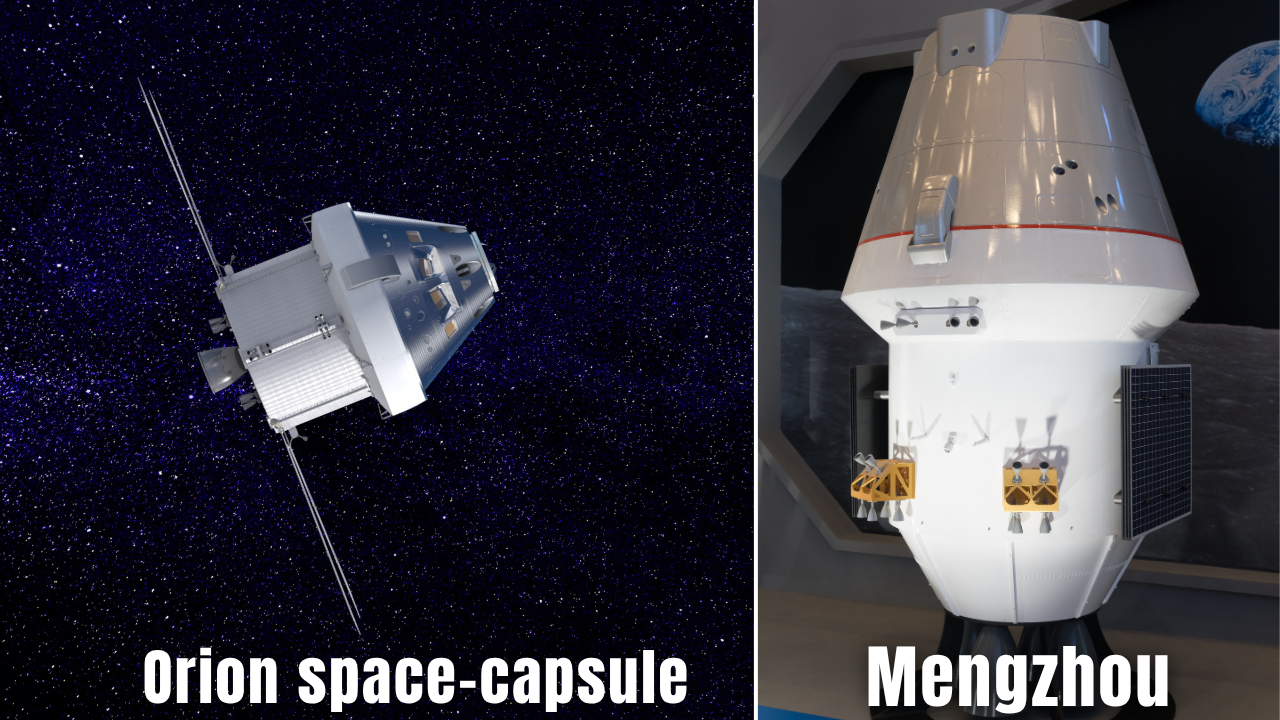
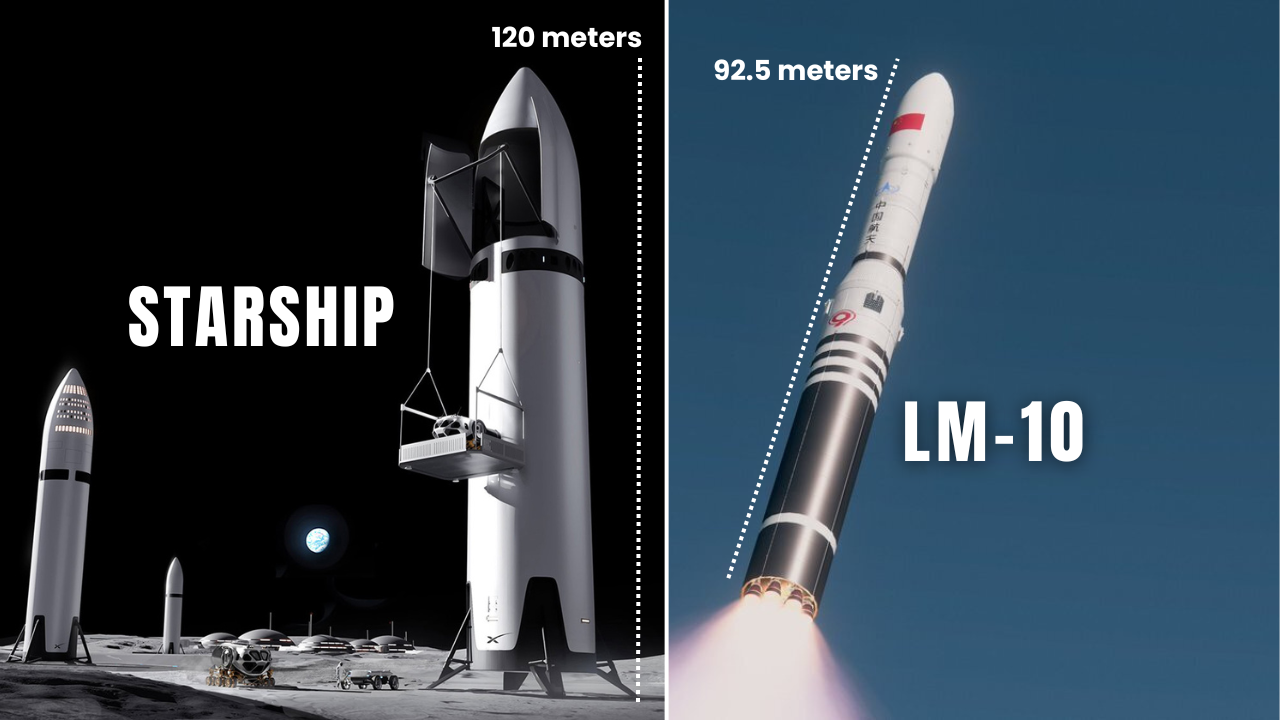
NASA's Artemis Program is designed to return humans to the Moon for the first time since Apollo 17 in 1972. The Artemis architecture involves the Space Launch System (SLS) rocket, the Orion spacecraft, and SpaceX's Starship Human Landing System (HLS). Artemis I, an uncrewed test, was completed successfully in 2022. Artemis II will fly astronauts around the Moon, and Artemis III aims to land them on the lunar south pole.
- SLS + Orion launch — Astronauts lifted into orbit aboard Orion capsule by the Space Launch System (SLS).
- Starship HLS pre-positioned in lunar orbit (NRHO).
- Orion docks with HLS in orbit, astronauts transfer to HLS for lunar descent.
- Two astronauts land on the Moon's south pole, stay several days conducting experiments.
- HLS ascends back to Orion, and the crew returns to Earth.
China's 2030 Lunar Mission: The Mengzhou + Long March 10 System
China's space agency, CNSA, plans to land astronauts on the Moon by 2030 as part of its rapidly growing space program. The mission will use the new Long March 10 heavy-lift rocket and the Mengzhou spacecraft for crew transport. A separate lunar lander, Lanyue, will handle descent and ascent operations. The mission plan involves two launches: one to send the lander to lunar orbit and another to send the crewed spacecraft for rendezvous and docking before descent.
Discussion (0)
Join the conversation
Comments will be available soon. Stay tuned!